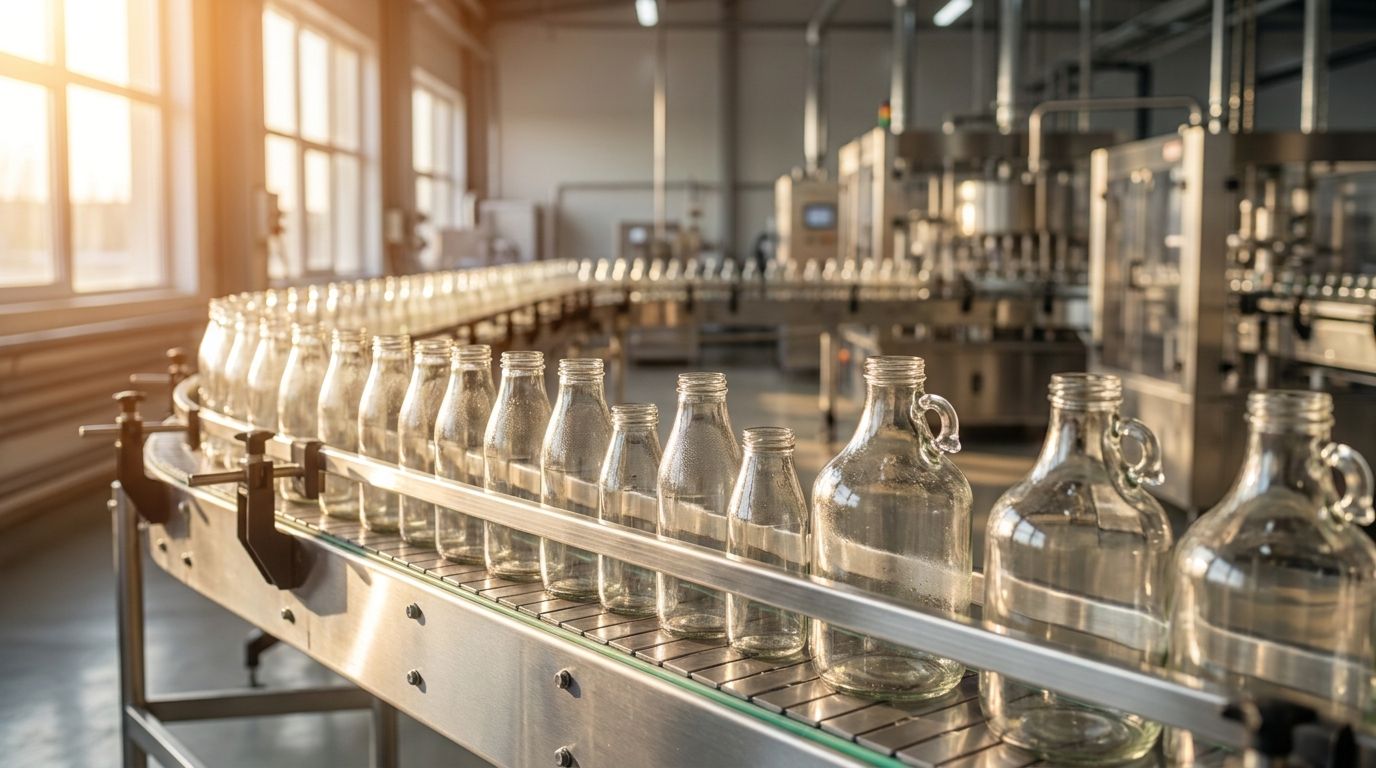
If you make food for a living — a sauce, a beverage, a baked good, a packaged product — your citrus supplier is part of your recipe. Choosing the right partner is about far more than price per gallon. Here is what to look for before you commit a production run.
Swapping a citrus supplier mid-formulation is expensive and risky: you re-test, you re-qualify, and you hope your customers don’t notice a change in the finished product. The goal is to choose well once. These five criteria are how serious buyers separate a dependable partner from a commodity broker.
Your formulation depends on inputs that don’t move. Before anything else, ask whether the juice is produced to a repeatable standard, batch after batch. A citrus ingredient that drifts in acidity or flavor forces you to reformulate on the fly — or worse, ship a product that tastes different from the last lot. Consistency is the first thing to verify and the last thing you should ever compromise. Ask how the supplier holds spec, and what happens when a lot falls out of range.
A shelf-stable juice is dramatically easier to schedule around than a perishable input. Think through the whole path: how the product ships, how it stores, how long it holds, and whether you can pick up directly when a run can’t wait. A supplier with a real production facility and dependable lead times keeps your line moving instead of waiting on a truck.
There’s a real difference between an anonymous bulk commodity and an ingredient with brand recognition. A known citrus brand can become a selling point on your own label — “made with Nellie & Joe’s Key West lime juice” means something to a shopper. Or, through private label, you can put your own brand on a proven juice. The right partner gives you both paths; a commodity broker gives you neither.
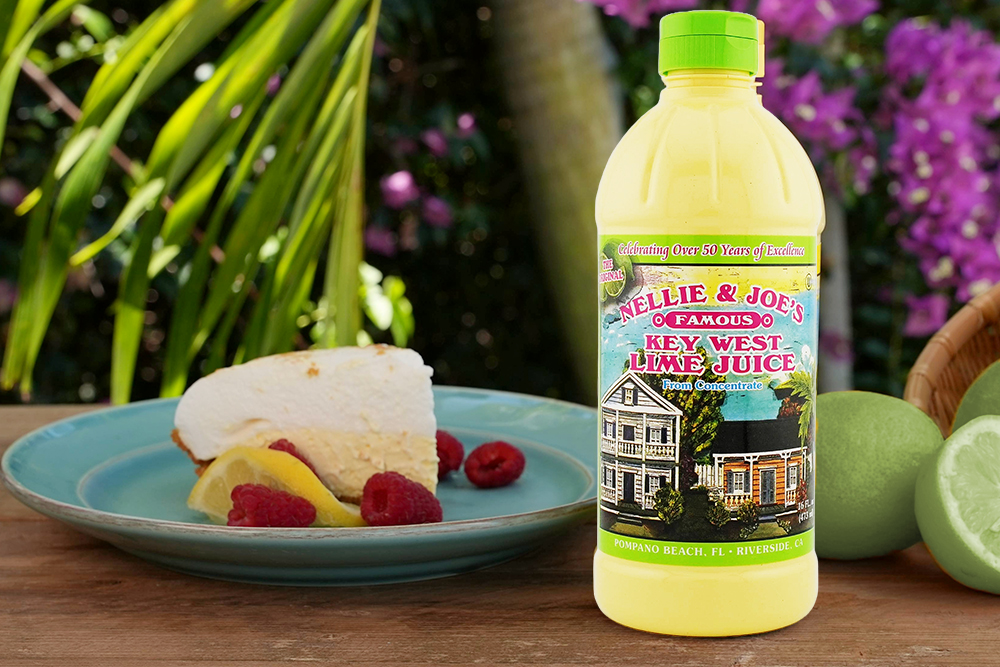
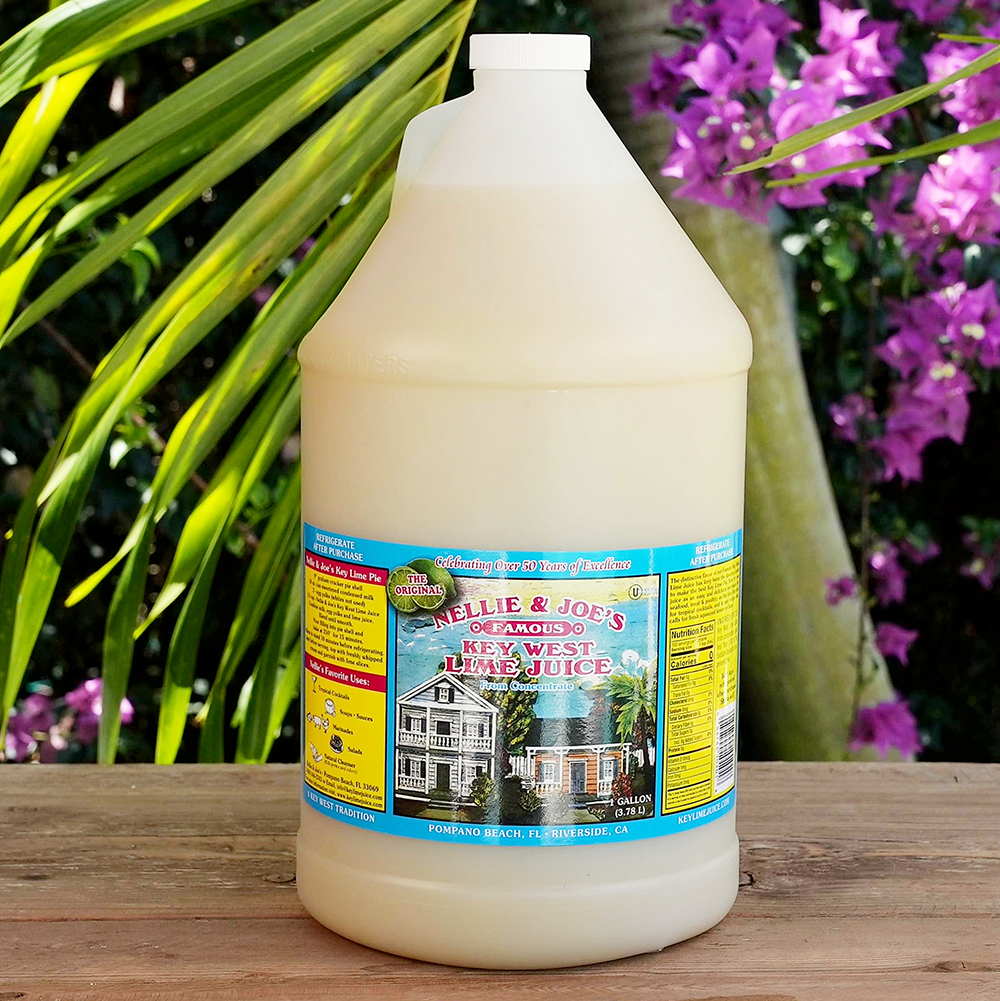
The best suppliers grow with your volume — from cases to bulk gallon packs — without forcing you to switch products as you scale. A successful launch shouldn’t mean re-qualifying a new supplier six months later. Ask for the full range up front, and confirm the bulk format you’ll standardize on. Nellie & Joe’s, for instance, runs from 12 × 16 oz cases up to four-pack one-gallon jugs, 5-gallon pails, and 55-gallon drums built for ingredient and high-volume use.
Decades of doing one thing well is not a marketing line — it shows up in the bottle and in how a supplier helps you solve problems. A company that has sourced and bottled citrus for generations understands flavor, sourcing, and quality control in a way a newcomer simply can’t. When something goes sideways on your line, that experience is who you want on the phone.
| What to look for | Commodity broker | Established maker |
|---|---|---|
| Batch consistency | Varies by source | Produced to a repeatable spec |
| Shelf stability | Unclear | Shelf-stable, built to store |
| Private label / co-pack | Rarely | Available |
| Pack range | Whatever’s on hand | Cases, 1-gallon jugs, 5-gallon pails, & 55-gallon drums |
| Direct pickup & facility | No | Real plant; trade pickup |
| Track record | Unknown | Bottling citrus since 1968 |
Price per gallon is what you pay once. Consistency, scale, and a maker who answers the phone are what you pay for on every lot after.
Before you commit a production run, get clear answers to these:
For buyers sourcing citrus as an ingredient, Nellie & Joe’s checks the boxes that matter:
Whether the juice is produced to a repeatable spec, how shelf-stable it is and what lead times look like, whether private-label or co-pack is available, what pack sizes scale with your volume, and whether you can pick up directly from the facility.
Yes — including four-pack one-gallon jugs built for high-volume and ingredient use, alongside standard case packs, so the same juice scales from a single location to a production run.
At the company’s production facility in Pompano Beach, Florida — a real manufacturing site that trade customers pick up loads from directly.
Since 1968. That is decades of sourcing and bottling Key West lime and lemon juice for retailers, foodservice operators, and manufacturers across North America.
See how Nellie & Joe’s supplies manufacturers with consistent, shelf-stable lime and lemon juice — in bulk gallon packs and private label, from a real Florida facility.
Since 1968, Nellie & Joe’s has made Famous Key West Lime Juice in Florida and supplied it to retailers, foodservice operators, and major manufacturers across North America. Today the company bottles lime and lemon juice — from single bottles to bulk gallon jugs — from its facility in Pompano Beach, FL. Explore the wholesale program →
Related reading: Bottled vs. fresh-squeezed citrus juice for foodservice