
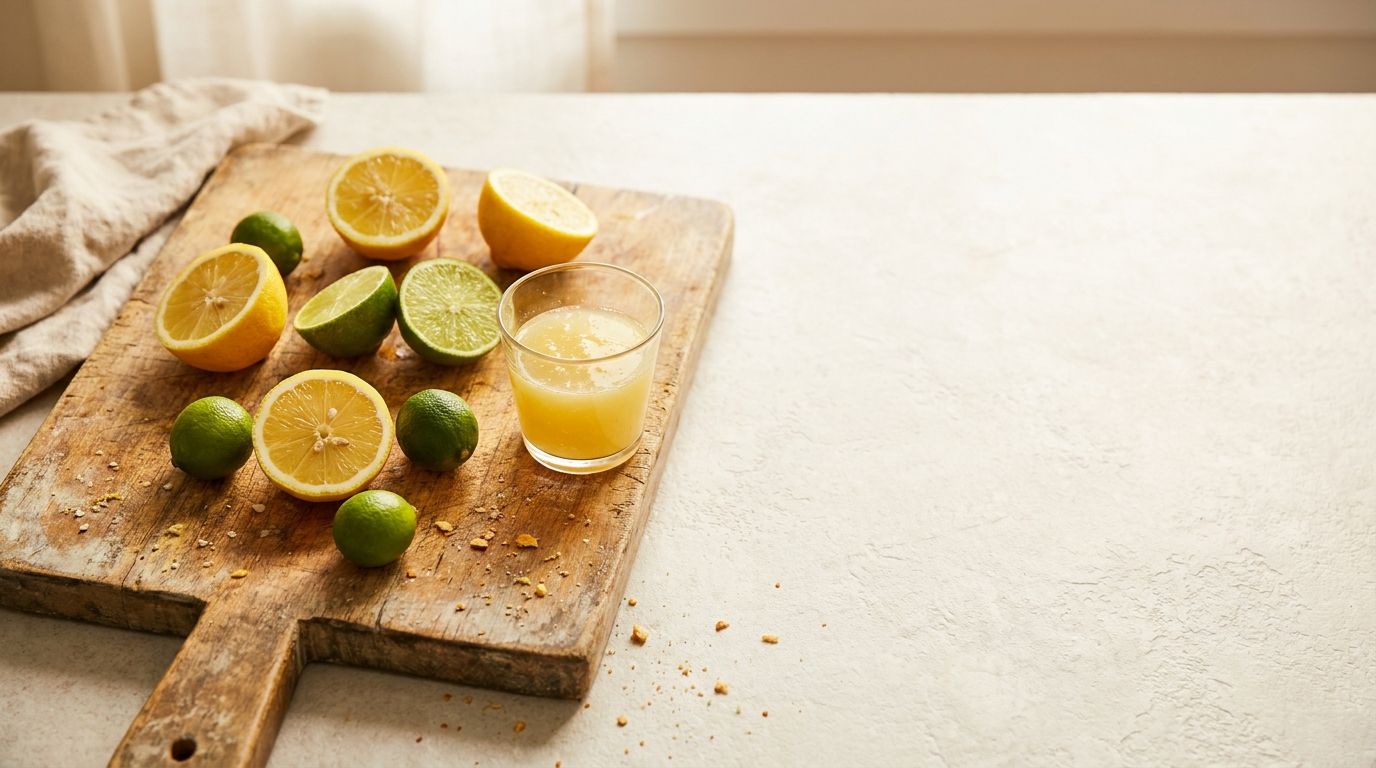
For any bar, bakery, or restaurant that runs on citrus, the same question comes up shift after shift: squeeze fresh limes and lemons, or pour from a bottle? Both belong in a working kitchen. Here is an honest look at the trade-offs — and where bottled Key West lime and lemon juice earns its spot on the line.
It is tempting to treat this as a matter of taste or pride — fresh is “better,” bottled is “cutting corners.” But for an operator costing a menu and running a line through a Friday-night rush, it is really a question of economics and consistency: what does each option actually cost you in labor, waste, and predictability, and which one lets you serve the same quality every time? Answer that, and the choice gets a lot clearer.
Let’s give fresh its due, because it earns it. Fresh fruit brings real things to a kitchen that a bottle can’t fully replicate:
So why doesn’t every kitchen squeeze everything? Because fresh also carries costs that never show up on the produce invoice — the ones you pay in labor, in waste, and in the drinks you remake when a batch comes out wrong.
For most high-volume kitchens, bottled citrus quietly solves the problems fresh creates. Four advantages do the heavy lifting.
Every bottle tastes the same. The margarita a guest falls in love with in March tastes identical in July — and identical at your second location. Bottled juice is produced to a repeatable standard, so the acidity and flavor your recipe is built on don’t drift with the season or the supplier.
No spoilage, no squeezing labor, and a fixed yield per bottle mean a predictable cost per ounce you can actually put on a spec sheet. That single fact is why so many beverage directors standardize on bottled acid: you can’t cost a cocktail program around an input that swings.
Shelf-stable bottles let you stock deep without watching fruit turn. You order to a par level, not to a guess about how many limes Thursday will need.
Open, pour, done. When the rush hits, your team isn’t cutting and pressing — they’re building drinks and plating desserts. Throughput climbs exactly when you need it most.
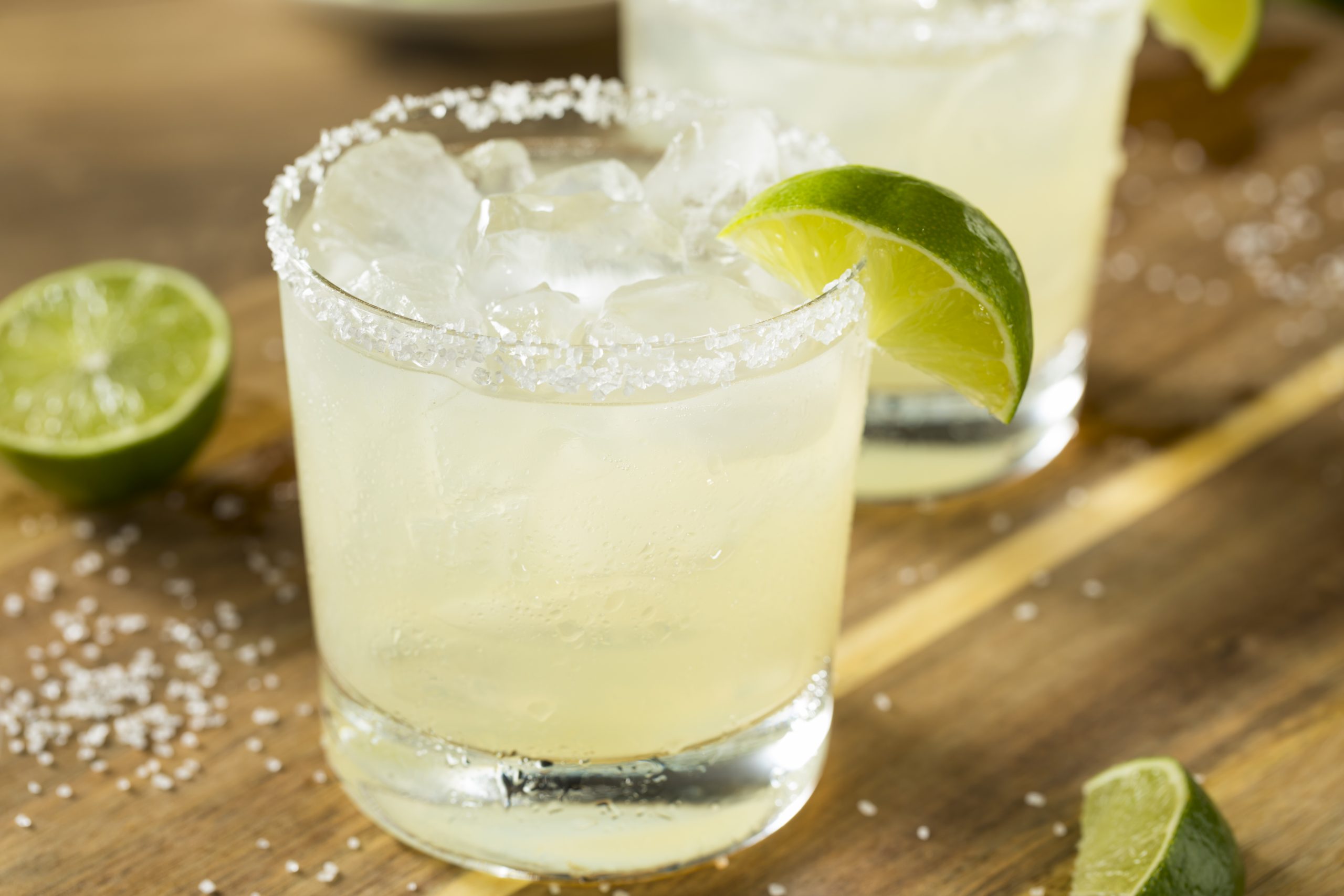
This is the heart of it. A signature drink or dessert is a promise: order it again and it will taste the way you remember. Fresh fruit makes that promise hard to keep, because acidity and sweetness move with the growing season, the region, and the box of fruit that showed up that morning.
Bottled Key West lime and lemon juice is made to hold a standard, so your recipes hold with it — across shifts, across cooks, across locations, and across the calendar. For a house margarita or a signature key lime pie, that reliability is the product.
Fresh is a flavor. Consistent is a business. The best kitchens know which one they’re selling.
Walk the full cost of fresh, not just the produce line:
Bottled juice trades that unpredictable, labor-heavy bundle for one fixed, countable number. For a kitchen trying to cost a menu accurately, that’s not a small thing — it’s the difference between a spec you can trust and a guess you re-run every week.
| Factor | Fresh-squeezed | Bottled Key West juice |
|---|---|---|
| Flavor consistency | Drifts with season & supplier | Repeatable, batch to batch |
| Prep labor | Daily wash, cut & press | Open and pour |
| Cost per ounce | Variable, hard to spec | Fixed and countable |
| Shelf life & waste | Perishable; spoilage risk | Shelf-stable; stock to par |
| Speed at the rush | Slower — hands tied up | Fast — built to order |
| Best role | Garnish & aromatic accent | The acid base of the recipe |
This isn’t all-or-nothing. The smartest kitchens use both — fresh where it shows, bottled where it counts.
Bottled lime for the acid base of margaritas, daiquiris, and sours; a fresh wheel or twist on the rim for aroma and show.
Consistent acidity is everything in a key lime pie or lemon bar. Bottled juice keeps the set, the tartness, and the flavor identical every bake.
Marinades, dressings, ceviche bases, and pan sauces lean on dependable citrus. Bottled juice means the same bright finish, plate after plate.

Not all bottled juice is equal, and the wrong bottle can undo the very consistency you switched for. When you evaluate a lime or lemon juice for your line, weigh five things:
Measured against that list, the appeal of a heritage Key West producer becomes clear.
If bottled is the right call for your acid base, the next question is whose. A few things set Nellie & Joe’s apart for a working kitchen:
Fresh has its moments, and a fresh garnish will always have a place. But for the consistency, cost control, and speed a high-volume kitchen lives on, bottled citrus is hard to beat — especially when it’s the same Key West lime and lemon juice behind America’s most famous key lime pies. Use fresh where it shows. Use bottled where it counts.
For a garnish, fresh fruit is lovely. For the acid base of a drink, a pie filling, or a marinade, bottled Key West lime juice gives a bar or kitchen consistency, speed, and a cost per ounce you can actually put on a spec sheet — the same result every shift and every location.
Nellie & Joe’s bottled lime and lemon juice is shelf-stable, so operators can stock it deep without watching fresh fruit turn. Follow the date and storage guidance printed on the bottle.
Yes. Nellie & Joe’s is the Key West lime juice behind America’s famous key lime pie — it is made for exactly that, with consistent acidity batch after batch so the dessert tastes the same every time.
From 12 × 16 oz cases to bulk four-pack one-gallon jugs, so a bar, bakery, or kitchen can match its volume without switching products as it grows.
It removes the wash-cut-squeeze labor and the spoilage of unsold fruit, trading an unpredictable, hard-to-cost line item for a countable one. The exact savings depend on your volume and menu.
See how Nellie & Joe’s supplies bars, bakeries, and kitchens with shelf-stable lime and lemon juice — in cases and bulk gallon packs, with pricing built for foodservice.
Since 1968, Nellie & Joe’s has made Famous Key West Lime Juice in Florida and supplied it to retailers, foodservice operators, and major manufacturers across North America. Today the company bottles lime and lemon juice — from single bottles to bulk gallon jugs — from its facility in Pompano Beach, FL. Explore the wholesale program →
Related reading: How to choose a bulk or private-label citrus juice supplier